¡El poder de prepararse!
Public Access Design

Rent Regulation Rights
Making Policy Public

What Does It Mean To Live In My Own Place?
Making Policy Public

Step Right Up
City Studies
Keep Your Family's Home
Public Access Design
Pass It On!
Making Policy Public







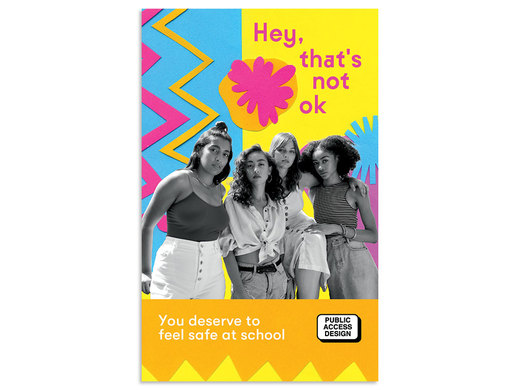


 Hey, That's Not Okay
One in three young people in NYC schools experience gender-based violence from their peers. Gender-based violence can look like a lot of different things, but at its core, it’s actions and comments that attack a person’s body, gender, and other ways they present themselves. This includes slutshaming, pressuring someone for sex, intentionally misgendering someone, or online harassment.
For young people of color–especially those who are queer, transgender, nonbinary, or gender nonconforming–dealing with gender-based violence is difficult and confusing. Many behaviors that cause harm are often normalized in schools , making it hard for students to speak up. And the process of reporting an incident is complicated and time consuming, so most cases go unreported.
That’s why Girls for Gender Equity reached out to CUP to help students experiencing gender-based violence understand their options and get support. With the help of designer Luisa Velez, the team created Hey, that’s not okay, a booklet that breaks down what gender-based violence is, how to report it, where to get support, and the importance of consent.
- 3.5″ × 5.5″
- $3.00